
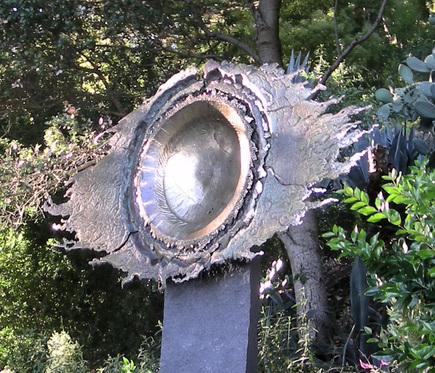
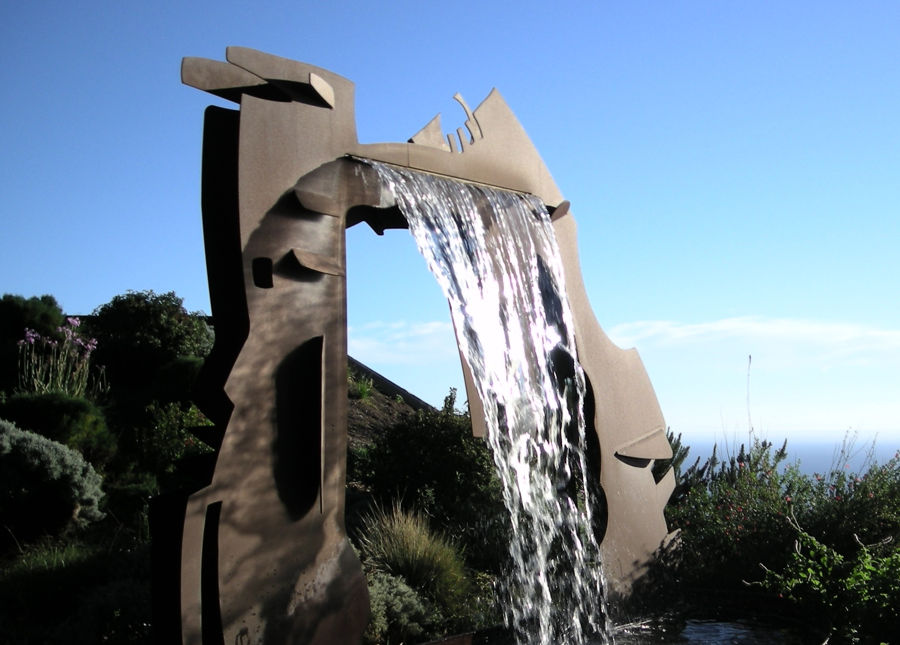
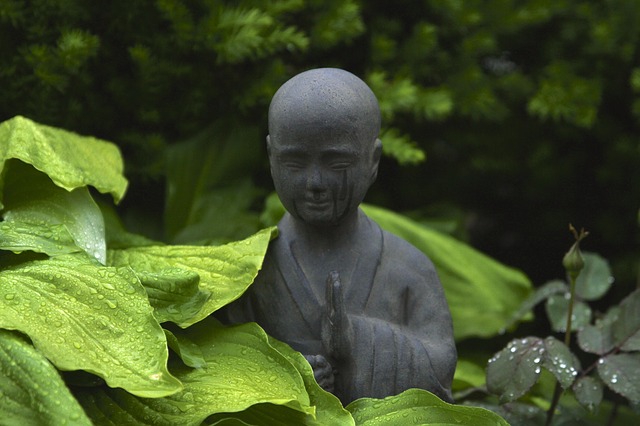
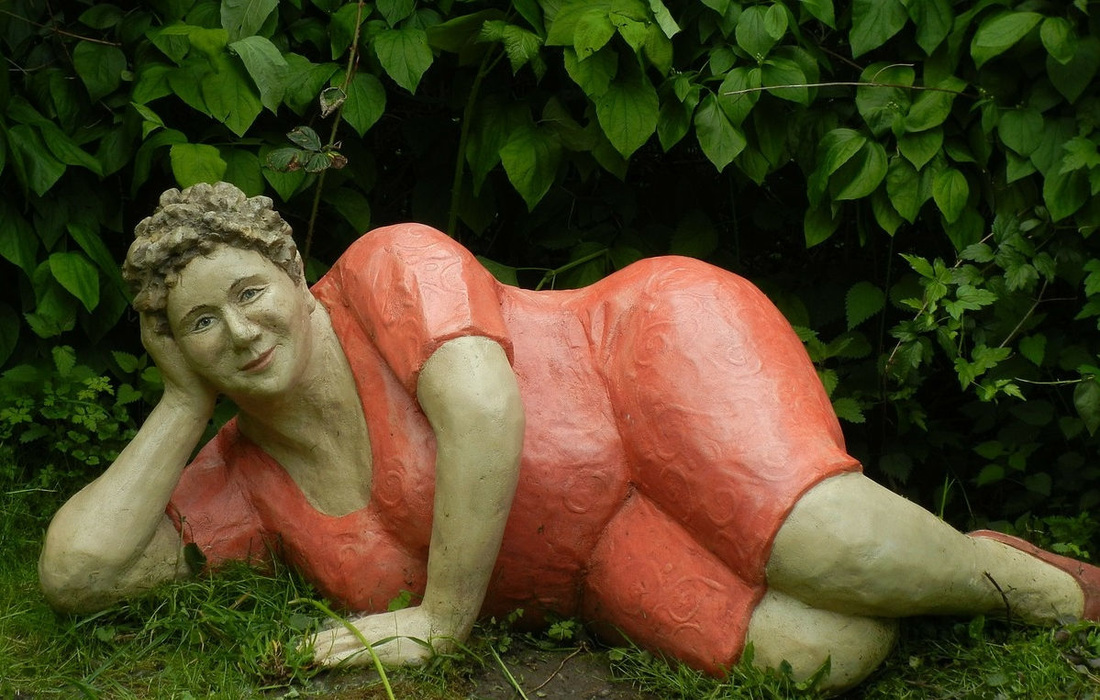
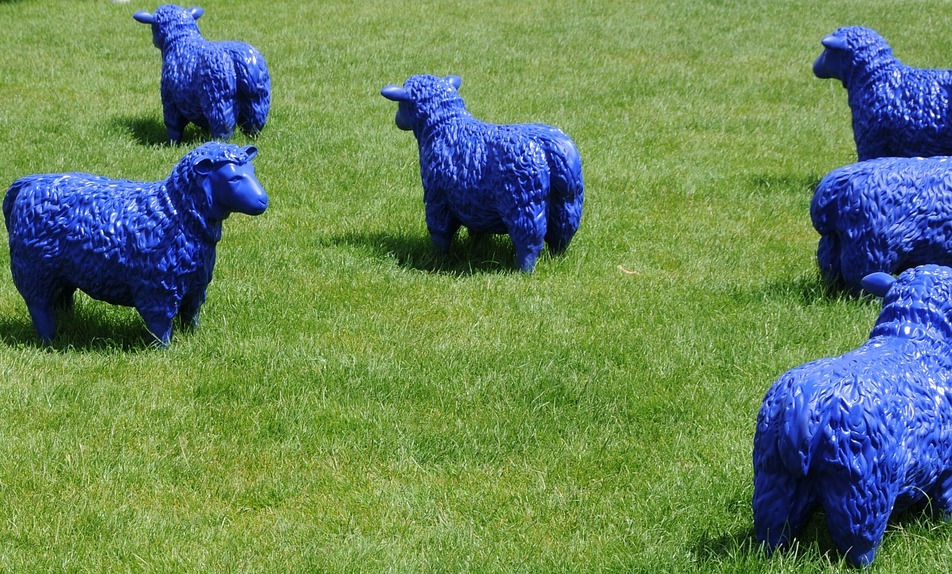
CENTER OF INTEREST: The first step is to determine the area you want to draw attention to. The second step is to identify where you want people to go. This is the center of interest. By inviting the eye to an art piece, you will visually and physically pull visitors through the landscape. Creating a center of interest (or focal point) is also useful for drawing attention away from undesirable views or noise. Placing a sculpture or art piece at the end of a long sight line helps to create a destination point and a reason for visitors to get there. If the desire is to slow down visitors, creating focal points along a pathway is a handy technique to persuade a few rests along the way. RHYTHM : Placing art to create rhythm in the landscape is a useful technique to incorporate multiple focal points or convey intriguing information. Although straight line placements are better suited for formal gardens, meandering curves are best used for more natural style landscapes. Using rhythm in the landscape gives a sense of pattern and energy that can be pleasing and reassuring to visitors. By incorporating repetitive colors or patterns along with the artwork, it creates a visual beat to your landscape. BACKDROP: When you want artwork to be the prominent landscape feature, place it in front of a dense hedge, tall wall, forested area, or along an elevated knoll. By placing art next to a backdrop that is different in color, texture or size, it creates an emphasis to that area. Sun and shadow angles are also important elements to consider. Prior to the permanent art installation, I recommend to check-in throughout the day and note how the sun and shadows play upon your art piece. TWEAKING THE OBVIOUS: Surprising people with an unexpected placement of artwork is a fun technique I enjoy using. Not only will it bring a delightful interruption to a less traveled area in the landscape, it may also reveal a bit of humor. Ready, Set, Enjoy! Author: Susan Combs Bauer, Landscape Architect at BauerCombs & Associates, Inc.
|
News & TipsBauerCombs News and Landscape Garden Design Tips with Susan. AuthorSusan Combs Bauer, Landscape Architect www.bauercombs.com 


Have a question? Send us a note and say hello, we'd love to hear from you!
|


 RSS Feed