
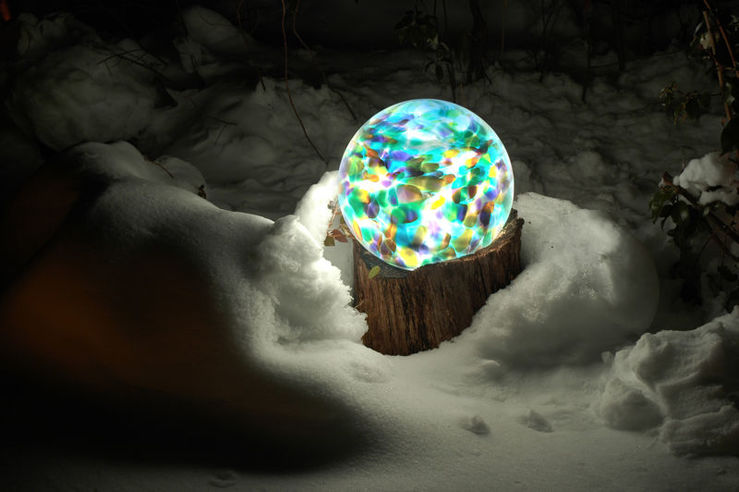
 Winter months can be grey and dreary, but it’s easy to brighten up any outdoor space with landscape lighting. By knowing a few design techniques, savvy do-it-yourselfers can install a low-voltage system with year-round benefits.
FUN STUFF For an instant splash of outdoor color, my favorite outdoor lighting is Tom Rupnicki’s hand blown NightOrbs www.nightorbs.com (Jupiter Orb shown above). NightOrbs may be placed just about anywhere in the landscape to brighten up dark winter days and nights. Be sure to place these beautiful artworks where they can be seen from indoor windows or entryways. TIP: If the ground is too frozen to install a low-voltage system, no worries, you can still enjoy NightOrbs in the daytime. Just place NightOrbs where you want a spectacular splash of color and hook up the electricity in the spring! TECHNICAL STUFF There are several lighting design techniques you can use to create a cheerful winter ambiance. Techniques I frequently use are: cross beaming, colored filters, up-lighting and down-lighting. Low voltage is my preferred lighting system for residential landscapes because 1) low voltage fixtures are easy to install, 2) low voltage cable can be buried in a shallow trench or conduit and, 3) low voltage fixtures are easy to move around to accommodate future changes in your landscape. The Transformer: Low voltage systems require a transformer that reduces the standard 120 volts to 12 volts. To determine the size of transformer needed, add up the wattages of all the light fixtures (lamps) for your system. Choose a transformer that will handle the total wattage for your system. The total wattage load should not exceed the transformer rating, and should not be less than one-third of the rating. If you are now feeling a little uncomfortable and need design assistance, no worries, contact me at BauerCombs & Associates, Inc. Landscape Architecture, I’m happy to help! BAUERCOMBS OUTDOOR LIGHTING TECHNIQUES Cross Beaming: Choose one or two landscape elements you wish to highlight such as, a group of trees, garden architecture, water feature or outdoor sculpture. Use a cross beam technique by casting two or more lights at different angles upon your subject. Cross beaming helps to reduce the amount of shadows typically made by just one light fixture. Colored Filters: To increase the illusion of depth, use colored filters to highlight pathways, garden architecture, walls and landscape beds. Amber filters are best for architectural elements while light-blue filters are best for planting areas. Up-lighting: This artistic technique illuminates features by casting light upwards. Use surface mounted or recessed light fixtures to highlight or create shadows and silhouettes. To create interesting shadows, place a spotlight in front of a plant that has a tall wall behind and aim the light upwards toward the wall. To create a silhouette, place a spotlight between the featured element and the wall with the light aimed at the wall. This technique creates an outline of the landscape feature and highlights in a unique and interesting way. Down-lighting: To brighten up larger outdoor areas, down-lighting, also called moonlighting, is an attractive solution. Down-lights are typically placed in trees, on building walls or poles. To create a subdued ambiance, place fixtures high above in trees. The secret to creating effective moonlighting is to place the light fixture midway in the tree to cast shadows of lower branches. Review & Test: Before the final installation, review and test your lighting layout from indoors. View at many different angles, make adjustments, and repeat the process until perfect! I hope you enjoyed this blog. If you have any questions please send me a message at BauerCombs & Associates, Inc. or view our website at www.bauercombs.com. Photo Credit: Tom Rupnicki creator of NightOrbs. “Brighten Up Your Winter with Landscape Lighting” author: Susan Combs Bauer, landscape architect at BauerCombs & Associates, Inc. – Connecting People to Nature by Design. |
News & TipsBauerCombs News and Landscape Garden Design Tips with Susan. AuthorSusan Combs Bauer, Landscape Architect www.bauercombs.com 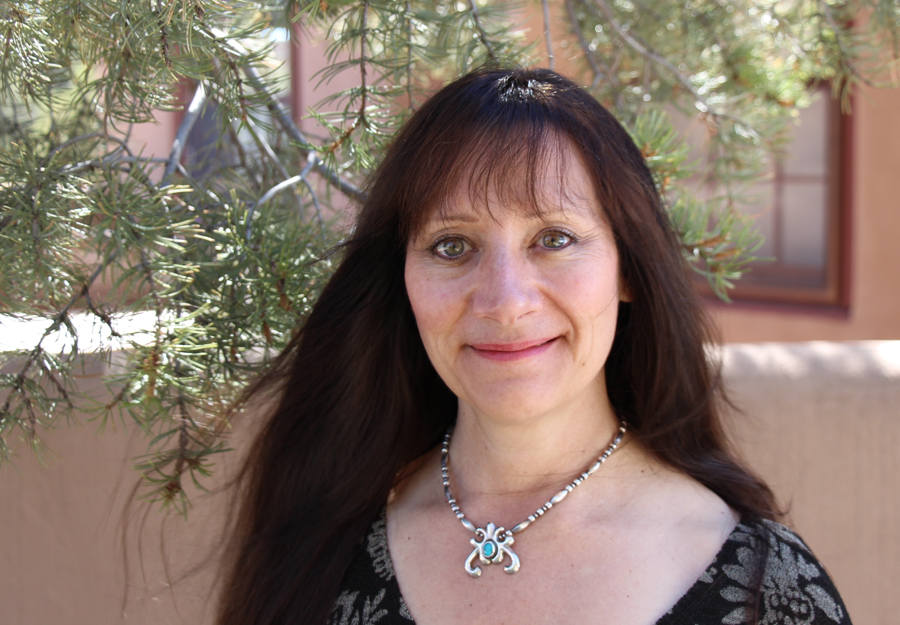

Have a question? Send us a note and say hello, we'd love to hear from you!
|
 RSS Feed